Needing a touch-up is not a sign that a tattoo was done badly. Skin is living tissue, it sheds, stretches and is exposed to sun and friction every single day for years after the ink goes in. Even a technically flawless custom piece will soften with time. What matters is knowing when a touch-up genuinely helps, what causes fading in the first place, and choosing a studio in Thane that treats a touch-up with the same care as the original session.
Why do tattoos fade in the first place?
Tattoo ink sits in the dermis, the layer of skin below the surface. Over years, the skin's natural cell turnover very slowly migrates pigment particles, softening edges and lightening saturation. This is normal and happens to every tattoo eventually, the speed just depends on a few factors.
Sun exposure is the single biggest accelerant. UV breaks down pigment molecules directly, which is why tattoos on arms and legs that see daily sun in Thane fade faster than pieces on covered areas. Friction and placement matter too, hands, feet, fingers and areas that rub against clothing or surfaces constantly lose ink faster than a forearm or thigh. Ink quality and technique at the time of the original tattoo also plays a role, poor needle depth or rushed shading fades unevenly and much sooner than correctly placed pigment.
How do I know if it's time for a touch-up?
There's a clear difference between a tattoo that has softened gracefully and one that's lost enough detail to need attention. Signs worth acting on include lines that have thinned and started to break up or merge together, colour that has visibly dulled or shifted in tone compared to reference photos from when it was fresh, and shading that has gone patchy or uneven in specific spots rather than fading evenly.
If the design still reads clearly from a normal viewing distance and the lines are intact, it likely doesn't need a touch-up yet. Chasing perfection on a piece that has simply matured naturally usually isn't worth the session. The honest answer, when you're not sure, is to send your artist a clear photo and ask.
Which styles need touch-ups the most?
Fine line and single-needle work. Because the lines start thin, there's less pigment margin before they visually break up. Fine line pieces on Indian skin tones typically benefit from a check-in around the 2-3 year mark, sometimes sooner on high-friction placements.
Saturated colour tattoos. Colour fades more noticeably than black & grey because the eye is sensitive to shifts in hue and vibrancy. Reds and yellows tend to lose intensity fastest, deep blues and blacks hold longest.
Hands, feet and fingers. These placements see constant friction, washing and sun, and fade dramatically faster than almost anywhere else on the body. If you have work in these spots, budget for more frequent touch-ups as part of owning the piece.
Bold black & grey and heavy linework tends to need the least maintenance. Strong contrast and thicker lines have more pigment margin and read clearly even as they soften, which is one reason it remains a popular choice for pieces meant to last decades with minimal upkeep.
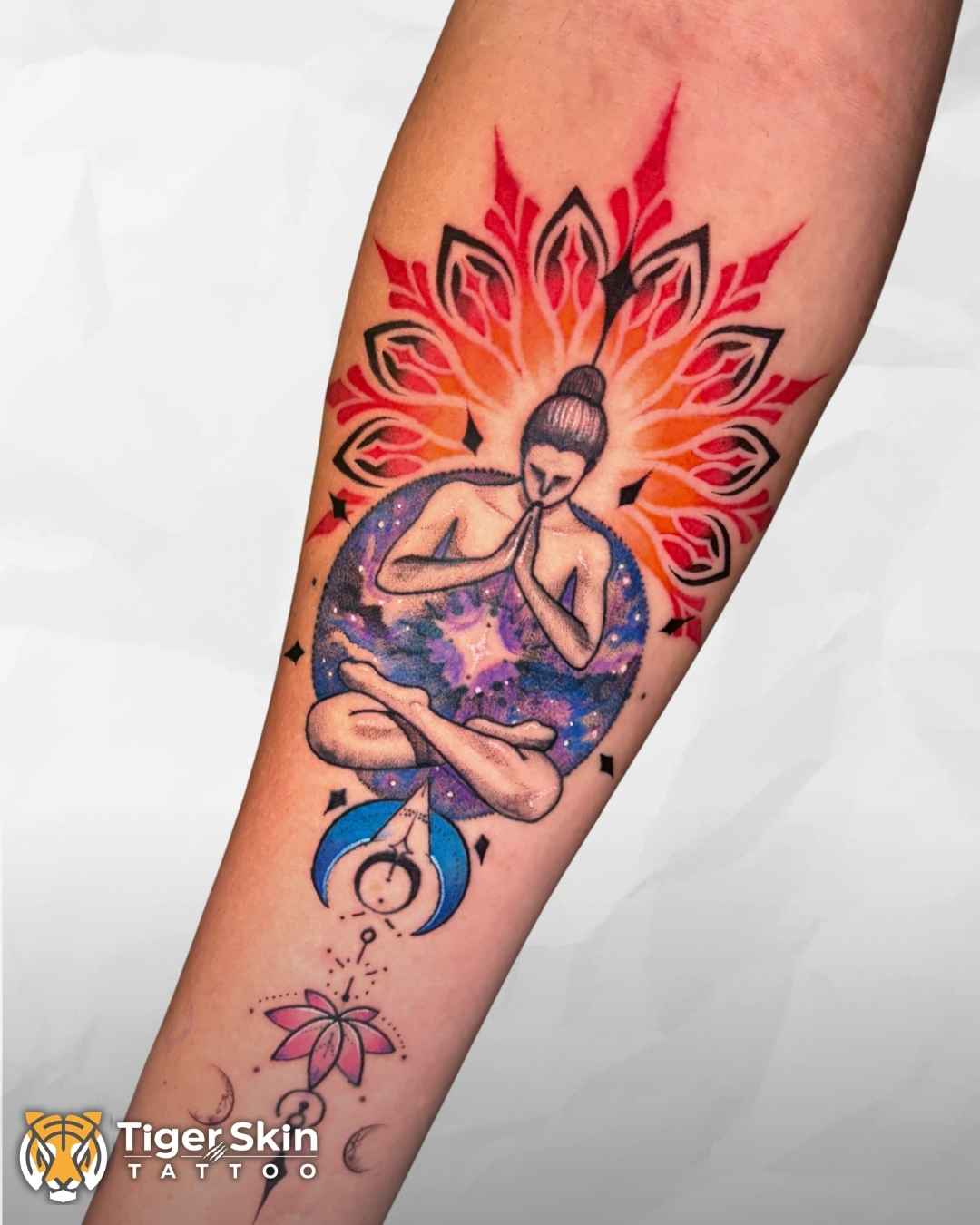
What happens during a touch-up session at Tiger Skin
A touch-up isn't just re-tracing over old lines. At Tiger Skin Tattoos in Naupada, Thane West, we start by looking at the piece properly, in good light, to see exactly what's happened: is it even fading, has it blown out in specific areas, has the colour shifted unevenly. From there we work out whether it's a straightforward refresh, going back over faded linework and rebuilding lost saturation, or whether small adjustments to line weight or shading will help the design hold better the second time around.
Sometimes a touch-up is also a chance to sharpen small details that never quite settled right after the original healing. We'll always tell you honestly what a touch-up can and can't fix, a tattoo that has genuinely lost too much structure is sometimes better served by a redesign or cover-up than a repeated touch-up.
Touch-up or cover-up? Know the difference
These get confused often. A touch-up restores a design you still like, using the same linework and palette to bring back what time has taken away. A cover-up is a different service entirely, it's for a tattoo you no longer want, and involves designing a new, usually larger piece specifically built to visually absorb the one underneath. If you're happy with your design and just want it looking sharp again, you want a touch-up.
What a tattoo touch-up costs in Thane
At Tiger Skin Tattoos, if we did your original piece and you come back within 6-8 weeks of healing for minor corrections, that touch-up is free, it's part of the original booking. For older pieces that have naturally faded over months or years, or for tattoos done at another studio, touch-ups are quoted at consultation based on size and how much rework is genuinely needed, generally starting from ₹1,500 for small areas. Larger colour or fine line pieces needing a fuller refresh are priced after we've seen the work in person.
Be cautious of anywhere offering a fixed, very low touch-up price without seeing the piece first. A five-year-old faded colour sleeve and a slightly soft fine line wrist symbol need completely different amounts of session time, and a proper quote reflects that.
Making touch-ups less necessary in the first place
The biggest lever you have is aftercare in the first month and sun protection for years after. Daily SPF on healed tattoos, especially colour and fine line work, is the single most effective thing you can do to slow fading. Keeping skin moisturised and choosing placements away from constant friction when you have a choice both help too. Our full tattoo aftercare guide covers the healing window in detail, and following it properly is what determines how long your piece stays sharp before it ever needs a touch-up.
Book a touch-up consultation in Thane
If a piece is starting to look tired, send us a photo or come in for a look. We'll tell you honestly whether it needs a touch-up, how much work that actually involves, and what it will cost, no pressure either way.
Touch-up FAQs.
Look for patchy fading, thin lines that have started to blur together, or colour that has visibly dulled compared to when it was fresh. If the design still reads clearly and the lines are crisp, it doesn't need a touch-up yet. A quick photo sent to your artist is usually enough to tell the difference between normal ageing and a piece that would benefit from a refresh.
At Tiger Skin Tattoos, minor touch-ups on a piece we originally did, within the first 6-8 weeks of healing, are free. Touch-ups on older pieces we did, or on tattoos done elsewhere, are quoted at consultation based on size, style and how much rework is needed, generally starting from ₹1,500 for small areas.
No. A touch-up restores an existing design that has faded or lost some detail, using the same linework and colour palette. A cover-up redesigns over an old tattoo you no longer want, often with a larger, different piece built to visually absorb what's underneath. If your tattoo is faded but you still like the design, you want a touch-up, not a cover-up.
Fine line and single-needle work, saturated colour pieces, and tattoos on high-friction placements like hands, feet and fingers fade fastest and need touch-ups most often. Bold black and grey work with strong contrast tends to hold the longest before a touch-up is worth considering.